Nathan Wilson
 16/09/2025
This year’s classification doesn’t just rearrange names on a list, it signals a broader market realignment.
The newly released Liv-ex 2025 Classification once again confirmed France’s dominance in the secondary market, but it also revealed some striking shifts in the global fine wine hierarchy. While Bordeaux and Burgundy remain the foundation stones of the market, Italy has continued to climb impressively, and American prestige wines now rank ahead of Bordeaux’s most historic First Growths.
France secured its top spot with 207 wines out of 332 listed, representing nearly two-thirds (62%) of the entire ranking. These were spread across all five price bands, underscoring both depth and breadth of strength.
However, the real growth story is Italy. In just two years, Italian wines have added 19 new labels to the classification, bringing their total to 86 wines (18.6%). Tuscany now ranks third overall, behind Bordeaux and Burgundy with 13.5% of all entries, just ahead of Piedmont’s 10.8%. At the very top, nine Italian wines broke into the first tier, split between Tuscany’s flagship Super Tuscans and Piedmont’s Barolo elite.
This trajectory mirrors market data we’ve highlighted in Moncharm’s mid-year analysis: Italian wines, particularly Super Tuscans like Sassicaia and Ornellaia, continue to provide resilience and liquidity during volatile trading conditions.
Liv-ex also noted that investors are favouring regions they perceive as “safe harbours” France, Italy, the U.S., and Spain, while more speculative regions have seen declines. Australia, for example, dropped from five classified wines last year to just two, with only one maintaining a position in the top echelon.
This aligns with broader trends we’ve tracked: in 2025, global buyers have gravitated toward established, globally recognised brands when faced with geopolitical tensions, tariffs, and currency swings.
Tier One: The Elite (Above £2,839 per case)
This exclusive bracket accounts for just under 20% of all wines listed. Unsurprisingly, Burgundy dominates, with Domaine de la Romanée-Conti (DRC) claiming the top three positions, Romanée-Conti, La Tâche, and Richebourg.
Yet perhaps the biggest talking point is the performance of California. Screaming Eagle, Harlan, Promontory, and Scarecrow all secured positions in the upper tier, often ahead of Bordeaux First Growths. Screaming Eagle’s main cuvée landed in sixth place overall, outpacing icons like Lafite and Mouton.
Bordeaux’s strongest performers were Petrus (#4) and Le Pin (#8), followed by Château Lafleur at a distant #26.
Tier Two: The Broad Middle (£781–£2,838)
This is by far the most crowded category, making up around 42% of the classification. Bordeaux dominates here with 85 wines, although many cluster toward the lower end of the price spectrum. This highlights a widening value gap between Bordeaux’s very top estates and its broader classified growths.
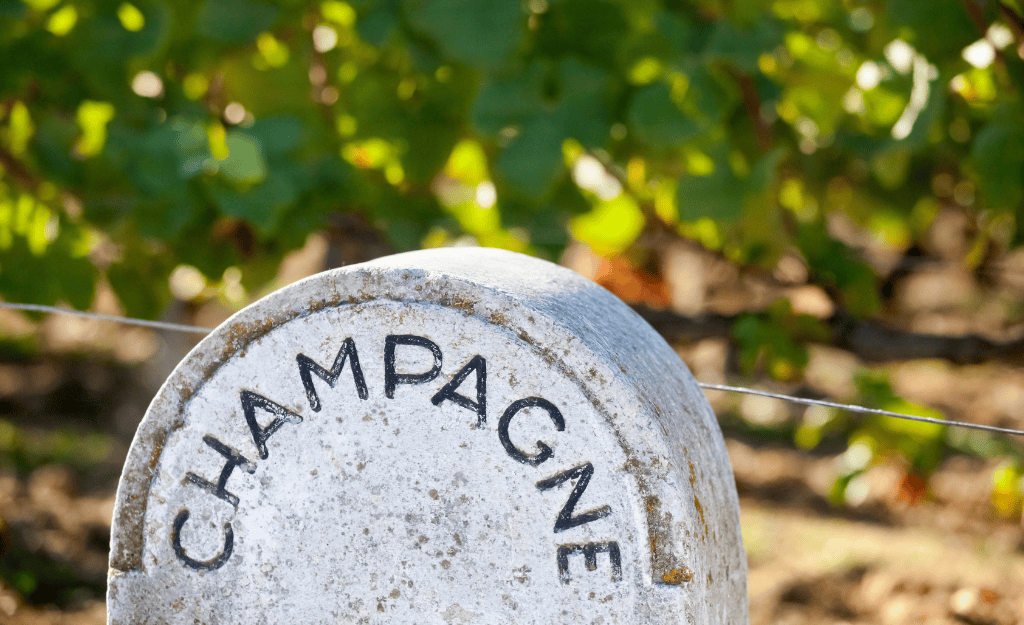
By contrast, Champagne shows a more even distribution across the band, with 11 labels demonstrating relative stability.
Lower Tiers (Three to Five)
Diversity grows in tiers three and four, although the numbers diminish. Tier Five (the entry level, £284–354) saw the fewest wines overall, just 18. Unsurprisingly, Bordeaux accounted for 15 of these, with most coming from Saint-Émilion Grand Crus, Pessac-Léognan Crus Classés, and Second Wines of higher-ranked estates. Italy managed two entrants here, joined by a single wine from New Zealand.
Burgundy: 33 wines in Tier One, far ahead of Bordeaux’s 10, consolidating its ultra-premium positioning. Newcomers included Clos des Lambrays and Domaine Leflaive’s Puligny-Montrachet Clavoillon.
Bordeaux: Still numerically dominant, but the majority of entries sit in lower tiers, showing that only a handful of estates command true global premium status.
Italy: Nine wines now occupy the top tier, reflecting rising demand for both Tuscan and Piedmont producers.
United States: Six wines made Tier One, all Californian cult icons, further cementing America’s growing influence on the global fine wine stage.
Spain: Just two Tier One entries, but still present as a reliable niche.
The 2025 Liv-ex Classification highlights a clear recalibration of fine wine’s secondary market:
France is still king, but its crown is increasingly shared with Burgundy at the top and Italy just beneath.
Italy’s momentum is unmistakable, its reputation and liquidity are catching up with Bordeaux, with Tuscan and Piedmont wines increasingly treated as blue-chip assets.
U.S. cult wines are no longer outsiders, they now outrank some of Bordeaux’s most historic First Growths, reinforcing their role as serious investment-grade wines.
Diversification is key. Investors who blend exposure across Bordeaux legends, Burgundy’s limited icons, and Italy’s rising stars are best positioned to weather market volatility.
This year’s classification doesn’t just rearrange names on a list, it signals a broader market realignment. For collectors and investors alike, the message is clear: while Bordeaux’s legacy endures, the fine wine world has become far more pluralistic. Smart portfolios will embrace that diversity.
Ready to explore fine wine investment?
At Moncharm, we help collectors and investors access the world’s most sought-after vintages with transparency and expertise. Book a free consultation today

 20 Oct 2026